
India Post GDS Recruitment 2026 – Notification, Vacancy, Eligibility, Age Limit & Apply Online
The Department of Posts (India Post), under the Ministry of Communications, has officially announced the highly anticipated India Post Gramin Dak Sevak (GDS) Recruitment 2026. This recruitment drive is a golden opportunity for candidates who have completed their 10th standard and are looking for a stable government job in their respective home states. With a massive announcement of 23,757 vacancies across various postal circles in India, the GDS recruitment for the July 2026 cycle stands as one of the largest employment generation programs in the rural postal sector. The Gramin Dak Sevaks play a pivotal role in ensuring that postal and financial services reach the deepest rural pockets of India.
The recruitment covers three major job profiles: Branch Postmaster (BPM), Assistant Branch Postmaster (ABPM), and Dak Sevak. This cycle aims to fill vacancies in branch post offices that operate in remote and rural areas. The selection is entirely based on a merit list generated from the 10th standard board exam marks, meaning there is no written examination or interview. This makes the GDS recruitment uniquely accessible to millions of secondary school graduates across the country. Candidates from all states and union territories are encouraged to apply online through the official India Post GDS engagement portal.
# Key Highlights of the Notification
The India Post GDS Recruitment 2026 notification brings forward several key aspects that every applicant must understand before filling out the online application. Here are the primary highlights:
- Conducting Body: Department of Posts, Ministry of Communications, Government of India.
- Post Names: Branch Postmaster (BPM), Assistant Branch Postmaster (ABPM), and Dak Sevaks.
- Total Vacancies: 23,757 Posts.
- Job Location: Across various postal circles in India (Pan India).
- Application Mode: Strictly Online via the GDS Engagement Portal.
- Selection Process: Merit-based (Marks obtained in the 10th standard board examination).
- Minimum Qualification: 10th standard (Matriculation) pass with Mathematics and English as compulsory or elective subjects.
- Language Requirement: Proficiency in the local language of the postal circle applied for.
# Important Dates & Deadlines
Staying updated with the official timeline is crucial for candidates to ensure they do not miss any significant deadlines. The India Post GDS Recruitment 2026 has a strict schedule that applicants must adhere to. The dates are as follows:
- Official Notification Release Date: 15th July 2026
- Starting Date for Online Application: 20th July 2026
- Closing Date for Online Application: 19th August 2026
- Last Date for Application Fee Payment: 19th August 2026
- Application Correction Window: 22nd August 2026 to 24th August 2026
- Expected Date for First Merit List Release: First week of September 2026
- Document Verification Process (First List): Mid-September 2026
# Total Vacancies Breakdown (State-wise)
The staggering 23,757 vacancies are distributed across 23 postal circles covering the entire country. The distribution is designed to cater to the specific requirements of rural branch post offices in different states. Below is an estimated breakdown of vacancies across major states (exact figures may vary slightly as per the official state-wise annexure):
- Uttar Pradesh: 3,500+ vacancies
- Bihar: 2,100+ vacancies
- Maharashtra: 2,000+ vacancies
- Rajasthan: 1,800+ vacancies
- Madhya Pradesh: 1,700+ vacancies
- Tamil Nadu: 1,600+ vacancies
- Karnataka: 1,500+ vacancies
- Andhra Pradesh & Telangana: 2,000+ vacancies combined
- West Bengal: 1,400+ vacancies
- Other Circles (Gujarat, Punjab, Haryana, North East, etc.): 6,157 vacancies
# Detailed Job Profile & Responsibilities (Day-to-day work)
The role of a Gramin Dak Sevak is multifaceted. Depending on the specific post, the day-to-day responsibilities vary significantly. Here is an in-depth look at what each role entails:
1. Branch Postmaster (BPM):
The BPM is the head of the Branch Post Office (BO). The responsibilities include:
- Managing the day-to-day operations of the Branch Post Office.
- Promoting and implementing various government schemes like Sukanya Samriddhi Yojana, Postal Life Insurance (PLI), and Rural Postal Life Insurance (RPLI).
- Managing financial transactions, including savings accounts, deposits, and withdrawals using the DARPAN device.
- Ensuring the smooth functioning of India Post Payments Bank (IPPB) services.
- Maintaining accurate records and submitting daily reports to the Account Office.
The ABPM assists the BPM and handles the delivery aspect. The responsibilities include:
- Sorting and delivering mail, parcels, and money orders at the doorstep of rural customers.
- Assisting the BPM in counter duties, such as selling stamps and stationery.
- Mobilizing deposits and procuring PLI/RPLI business.
- Using hand-held devices or smartphones for real-time tracking and delivery updates.
- Assisting the Postmaster/Sub-Postmaster in daily operations.
- Sorting mail, packing, and dispatching mail bags.
- Delivering mail in the local area if required.
- Ensuring the cleanliness and proper upkeep of the post office premises.
The remuneration for GDS employees is provided in the form of Time Related Continuity Allowance (TRCA). The salary structure is quite attractive for a 10th-pass candidate and includes various allowances.
TRCA Slabs:
- Branch Postmaster (BPM): The starting TRCA is Rs. 12,000/- per month, which can go up to Rs. 29,380/- based on the workload and increments.
- ABPM / Dak Sevak: The starting TRCA is Rs. 10,000/- per month, which can increase up to Rs. 24,470/-.
- Dearness Allowance (DA): GDS employees are entitled to DA on their basic TRCA, which is revised bi-annually by the central government. Currently, the DA is a significant percentage of the basic TRCA.
- Office Maintenance Allowance: BPMs receive a specific allowance for maintaining the Branch Post Office premises, electricity, and stationary.
- Combined Duty Allowance: If a BPM or ABPM is asked to perform additional duties, they are compensated with a combined duty allowance.
- Bonus: GDS employees receive an annual bonus during the festival of Diwali (Adhoc Bonus).
- Leave Entitlement: They are entitled to 20 days of paid leave per year.
To ensure that the right candidates are selected for these crucial rural posts, the Department of Posts has laid down strict educational eligibility criteria.
- Mandatory Qualification: The applicant must possess a Secondary School Examination pass certificate of 10th standard.
- Mandatory Subjects: The candidate must have passed Mathematics and English as compulsory or elective subjects in the 10th standard.
- Recognized Board: The 10th standard must have been completed from a recognized Board of School Education conducted by the Government of India, State Governments, or Union Territories.
- Pass Marks Requirement: Candidates must have passing marks in all subjects. No weightage is given for higher educational qualifications like 12th standard, Graduation, or Post-Graduation. The entire selection is solely based on 10th-grade performance.
Age eligibility is a critical factor for applying. The age limit ensures that young and capable individuals are recruited into the system.
- Minimum Age: 18 Years
- Maximum Age: 40 Years
- Cut-off Date: The age will be calculated as of the last date of application submission (e.g., 19th August 2026).
The Government of India provides age relaxation for various reserved categories to ensure inclusive employment:
- SC/ST Category: 5 Years relaxation (Upper age limit becomes 45 years).
- OBC Category: 3 Years relaxation (Upper age limit becomes 43 years).
- Economically Weaker Section (EWS): No age relaxation.
- Persons with Disabilities (PwD): 10 Years relaxation.
- PwD + OBC: 13 Years relaxation.
- PwD + SC/ST: 15 Years relaxation.
Given the digital transformation of India Post, certain additional skill sets are required.
Knowledge of Local Language:
- The candidate must have studied the local language of the respective postal circle up to at least the 10th standard (as a compulsory or elective subject).
- This is essential because the primary duty of a GDS involves interacting with the rural population in their native tongue.
- A basic understanding of computers is mandatory. While a formal certificate might not always be demanded during the application, candidates must be comfortable using smartphones, tablets, and basic computer applications. The entire postal operation is now digitalised through the DARPAN project.
- Knowledge of cycling is a prerequisite for all GDS posts, as ABPMs and Dak Sevaks need to travel within villages to deliver mail. Riding a scooter or motorcycle is also considered fulfilling the cycling requirement.
The application process is designed to be affordable.
- For General/OBC/EWS Male/Trans-man Candidates: A nominal fee of Rs. 100/- is applicable.
- For SC/ST/PwD/All Female/Trans-woman Candidates: The application fee is completely exempted.
- The fee can be paid online using Credit/Debit Cards, Net Banking, or UPI.
- Offline payment is also available at any Head Post Office in India, where candidates can deposit the fee using a system-generated challan.
The India Post GDS selection process is highly transparent and entirely automated.
- No Written Exam: There is no written examination or interview.
- Merit List Generation: The selection is based on the system-generated merit list based on the marks obtained in the 10th standard.
- Percentage Calculation: The marks obtained in all subjects (excluding extra subjects in some boards) are converted into percentages. If a board provides grades/points (like CGPA), they will be multiplied by a specific factor (usually 9.5) to arrive at the percentage.
- Tie-Breaking Rule: If two candidates secure the exact same percentage, the tie is resolved using the following order of preference: candidate older in age, Trans-woman, Trans-man, Female candidate, Male candidate.
Since there is no exam, "exam difficulty" translates to the intense competition for the merit list. The cut-off marks for India Post GDS are notoriously high due to the sheer volume of applicants.
- General/OBC: In states like Haryana, Punjab, and Uttar Pradesh, the cut-off often skyrockets to 97% to 100%.
- SC/ST/EWS: The cut-offs for these categories usually range between 90% to 95%.
- North-Eastern States: The cut-offs are comparatively lower, often hovering around 85% to 90%.
# How to Apply Online Step-by-Step
Applying for the GDS post involves a systematic online process:
- Registration: Visit the official GDS engagement portal (indiapostgdsonline.gov.in). Click on 'Registration', enter your mobile number, email ID, and verify them via OTP. Fill in basic details like Name, Father's Name, Date of Birth, Gender, and Community.
- Fee Payment: Log in with your registration number and pay the Rs. 100 fee online (if applicable).
- Apply Online: Fill in the detailed application form, including address details, 10th board details, and marks obtained.
- Choose Preferences: Select your preferred division and prioritize the post offices where you wish to work. You can select multiple preferences.
- Upload Documents: Upload the required scanned documents in the specified format.
- Submit and Print: Review the application, submit it, and take a printout for future reference.
Candidates must keep the following documents ready in scanned format before applying:
- Recent Passport Size Photograph: JPEG format, max 50KB size.
- Signature: JPEG format, max 20KB size.
- 10th Class Marksheet/Certificate: (Required during document verification, sometimes basic details upload required).
- Community/Caste Certificate (if applicable): SC/ST/OBC/EWS certificate in the prescribed format.
- Disability Certificate (if applicable): For PwD candidates.
Mistakes happen, and India Post provides a short window for corrections.
- The correction window opens for 3 days after the application closing date.
- Candidates can edit limited fields such as Name spelling, Address, Educational Board details, and preferences.
- Mobile number, Email ID, and Category are usually NOT editable. It is highly advised to double-check the form before the initial submission.
A job as a Gramin Dak Sevak is just the beginning. The Department of Posts offers excellent career progression opportunities through departmental exams.
- After 3 Years of Service: A GDS can appear for the Limited Departmental Competitive Examination (LDCE) to be promoted to the post of Postman or Mail Guard.
- After 5 Years of Service: A GDS becomes eligible to appear for the exam for the post of Postal Assistant (PA) or Sorting Assistant (SA), which is a high-paying clerical cadre post.
- Further Promotions: From PA/SA, one can eventually rise to Inspector of Posts (IPO) and further up the Group B gazetted ranks.
Although the initial GDS recruitment does not have a written exam, candidates aiming for future promotions (Postman/Postal Assistant exams) must be prepared. The syllabus for these departmental exams includes:
- General Awareness & Basic Arithmetic: Indian Geography, Civics, General Knowledge, Indian Culture & Freedom Struggle. Arithmetic covers BODMAS, Percentages, Profit and Loss, Simple Interest, Average, Time and Work.
- Postal Operations (Part A & B): Detailed knowledge of the Post Office Guide Part-1, Postal Manual Volume V, product and services of India Post, PLI/RPLI rules.
- Local Language Test: Translation from English to local language and vice-versa, letter writing, and short essays.
For those planning a long-term career in India Post and preparing for departmental exams:
- Books: Read the 'Post Office Guide Part I' thoroughly. For Mathematics and General Awareness, standard books like R.S. Aggarwal and Lucent's GK are highly recommended.
- Strategy: Dedicate 1-2 hours daily alongside GDS duties. Solve previous years' departmental question papers. Focus heavily on postal manuals, as they carry the maximum weightage.
Once the merit list is declared, shortlisted candidates will receive an SMS and email for Document Verification (DV).
- The candidate must report to the verifying authority (usually the Divisional Head) within 15 days of the result declaration.
- Original Documents required: 10th Marksheet, 10th Certificate, Caste Certificate (must be valid and centrally recognized), EWS Certificate, Medical Certificate, and Identity Proof (Aadhar/PAN).
- If any discrepancy is found between the uploaded marks and original documents, the candidature will be outright rejected.
After successful document verification, candidates undergo an engagement process.
- Pre-engagement Training: Candidates must complete a mandatory practical training program (usually 15 days) at a Sub Post Office or Head Post Office.
- Security Deposit: Before joining, candidates must furnish a security deposit (Fidelity Guarantee Bond) of Rs. 1,00,000/- (amount subject to change).
- Accommodation for BPM: A selected BPM must arrange for a suitable space for the Branch Post Office in the village selected, conforming to departmental standards, within 30 days of selection.
Q1: Can higher education candidates (Graduates/Post Graduates) apply? Yes, they can apply. However, no preference or extra marks will be given for higher qualifications. The merit is strictly based on 10th-grade marks.
Q2: Is a computer certificate strictly necessary? While working knowledge of computers is required, a formal certificate is generally not mandatory during the initial online application stage, but may be asked for during DV.
Q3: Can I apply for multiple states? No, a candidate can apply for only one division within a single postal circle (state).
Q4: Is the GDS job a permanent government job? GDS is an extra-departmental job. It is secure and permanent up to the age of 65, but GDS employees are outside the regular civil service class. However, they get most benefits akin to regular employees.
# Important Links
- Official Website: indiapostgdsonline.gov.in
- Official Notification PDF: Available on the official portal.
- Online Registration Link: Activated on 20th July 2026.
- Login & Fee Payment Link: Activated on 20th July 2026.
# Additional Information for Applicants
In addition to the aforementioned details, candidates must also focus on maintaining high standards of integrity and discipline. The Gramin Dak Sevaks serve as the backbone of rural communication and financial empowerment. It is vital for every applicant to understand that this role demands a high level of commitment, community service, and responsibility. The postmen and branch postmasters not only deliver letters but also bring joy, financial services, and essential government schemes directly to the doorsteps of millions of rural households in India. As India Post continues its digital transformation journey through initiatives like the DARPAN 2.0 roll-out, GDS employees are equipped with modern hand-held devices that enable real-time financial transactions, direct benefit transfers (DBT), and postal life insurance premium collections. This technological leap has significantly enhanced the efficiency and reach of rural postal services, making the GDS job both challenging and rewarding. Aspiring candidates should therefore look at this recruitment not just as employment, but as a unique opportunity to serve the nation and contribute to the socio-economic development of rural India. Let us embrace this chance to be a part of the world's largest postal network and shape the future of rural communication.
Prepare & Test Your Speed on TypeHindi
Practice full 10-minute exam simulations for SSC CHSL, High Courts, and state clerical exams with real WPM & accuracy scoring.
Mandated by SSC for Hindi typing tests. Practice with official Unicode InScript layout and realistic passages.
Step-by-step interactive lessons for beginners. Master finger positions on home row, top row, and bottom row.
Interactive visual map of all vowels, consonants, halants, and special conjunct characters in Devanagari script.
Build muscle memory and reflex speed while destroying falling words in Hindi and English.
Interactive steno stroke teacher, vector animated demonstrations, word builder, and 40–120 WPM audio dictations.
Related Articles & Typing Guides
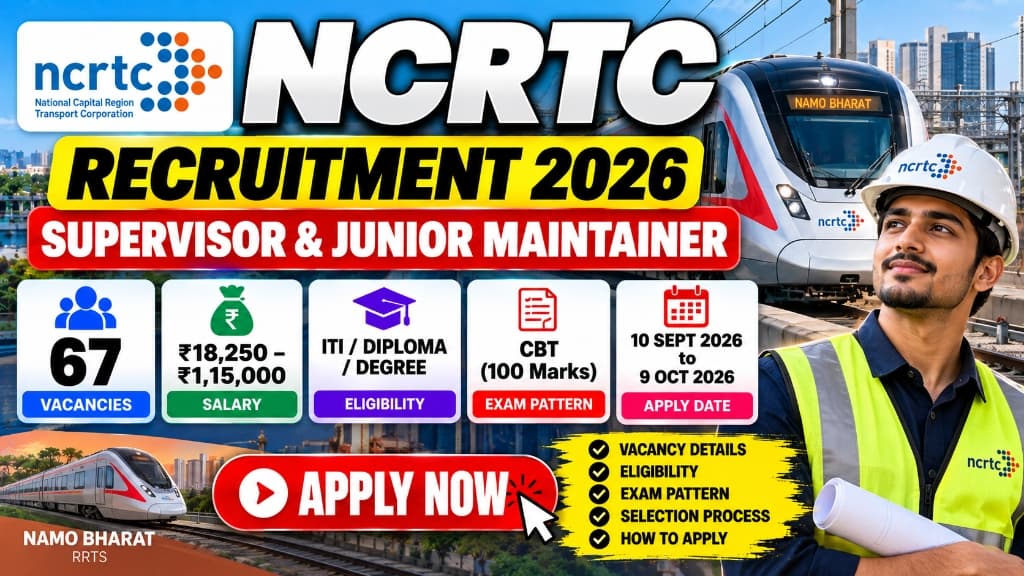
NCRTC Recruitment 2026: 67 Vacancies for Supervisor and Junior Maintainer Posts, Eligibility, Salary, Exam Pattern and How to Apply
The National Capital Region Transport Corporation (NCRTC) has released Vacancy Notice No. 32/2026 for the direct recruitment of Operations & Maintenance staff for the Namo Bharat/RRTS system.
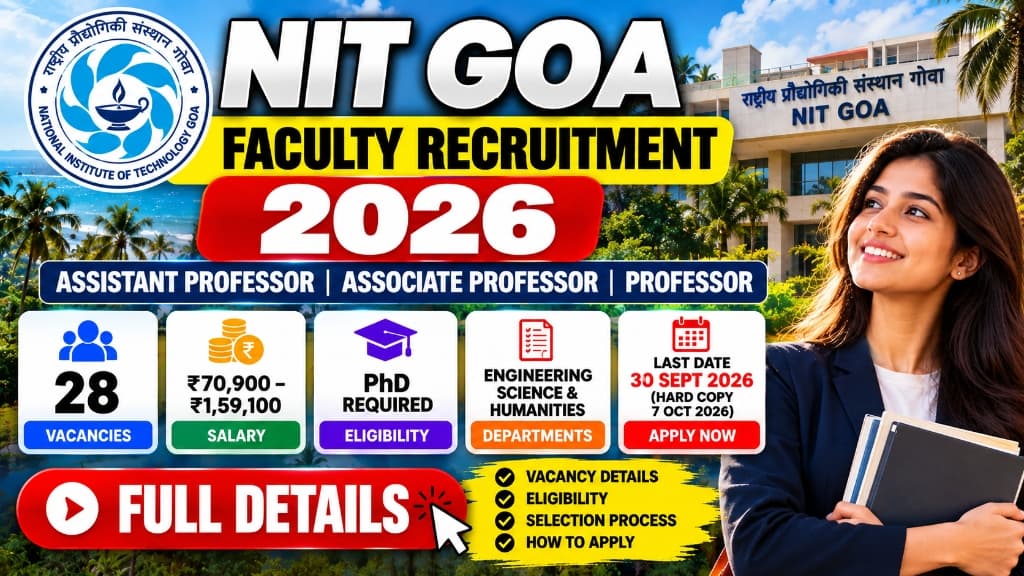
NIT Goa Faculty Recruitment 2026: 28 Posts, Eligibility, Salary, Vacancy, Selection Process and How to Apply
The National Institute of Technology Goa (NIT Goa) has released a notification for the recruitment of faculty members for various departments.
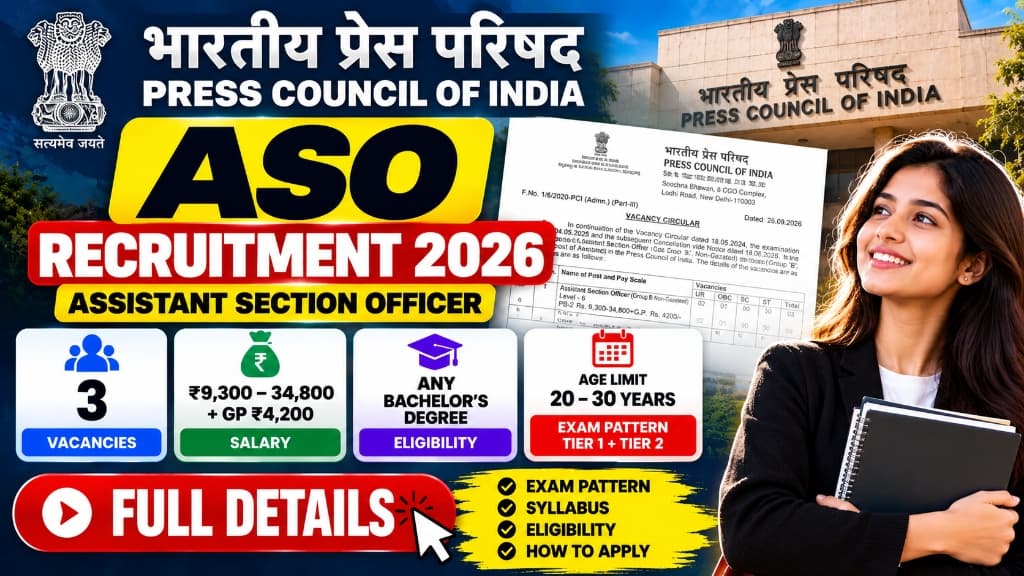
Press Council of India ASO Recruitment 2026: 3 Vacancies, Eligibility, Salary, Exam Pattern, Syllabus and How to Apply
The Press Council of India (PCI) has released a fresh Vacancy Circular 2026 for recruitment to the post of Assistant Section Officer (ASO).
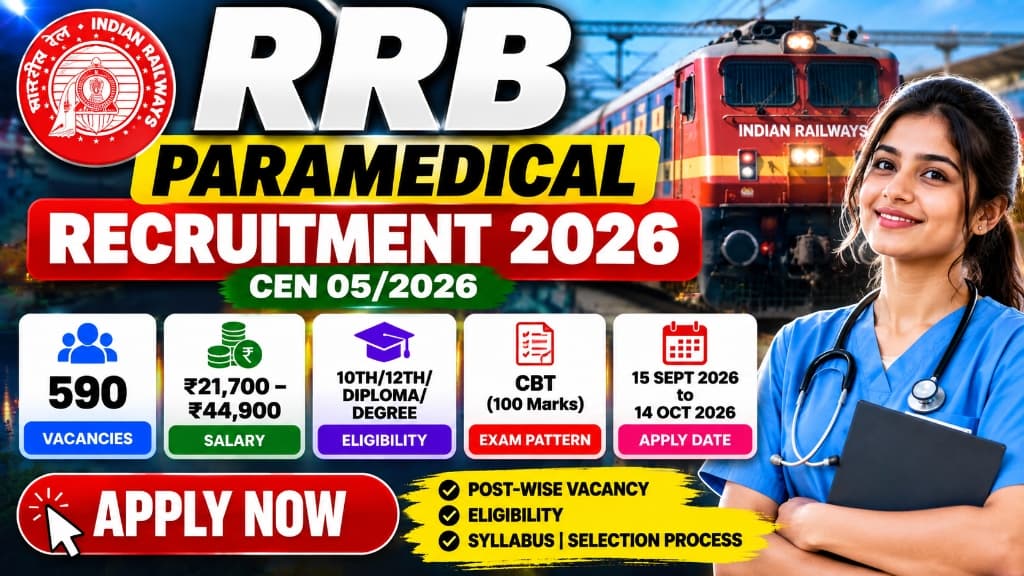
RRB Paramedical Recruitment 2026: 590 Vacancies, Eligibility, Salary, Exam Pattern, Selection Process and How to Apply
The Railway Recruitment Boards (RRBs) have released the RRB Paramedical Recruitment 2026 notification for 590 vacancies. Apply online till 14 October 2026.